
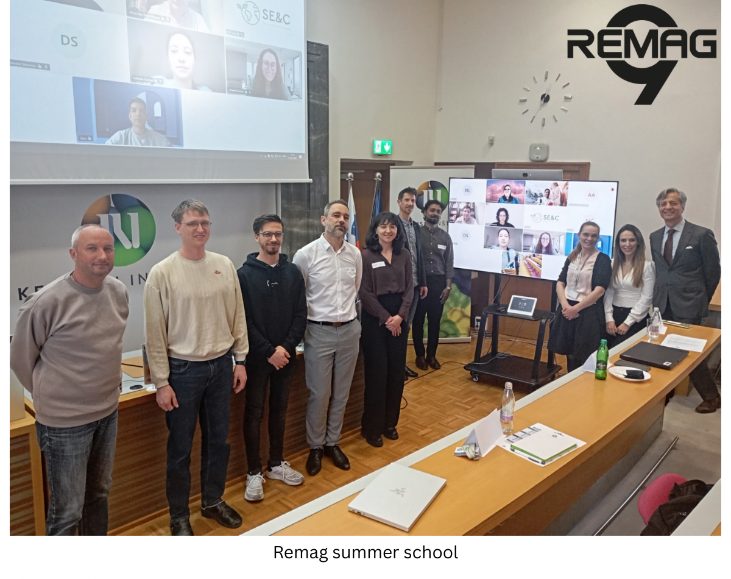
The ReMag project organized the Summer School on Permanent Magnet Recycling and Critical Raw Materials, hosted by the Department of Catalysis and Chemical Reaction Engineering at the National Institute of Chemistry (NIC) in Slovenia. The programme focused on the rapidly growing field of permanent magnet and industrial waste recycling and the recovery of critical raw materials — essential for Europe’s green and digital transition.
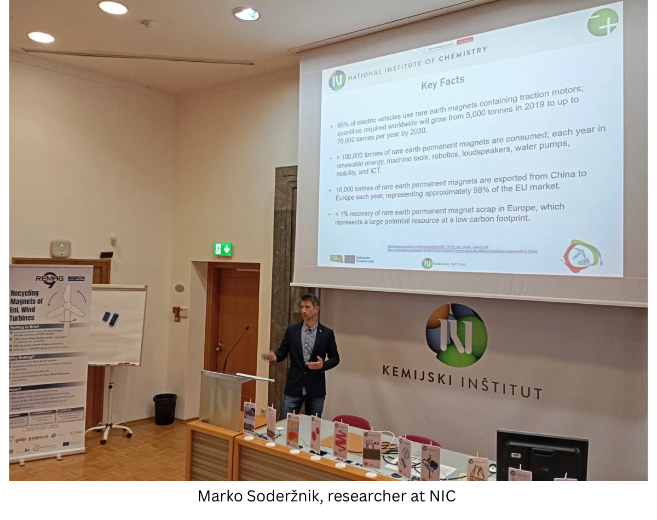
Rare-earth permanent magnets play a key role in wind turbines, electric vehicles, and advanced electronics, yet Europe remains highly dependent on imports and faces increasing supply-chain risks. A total of 18.3 kt of REE valued at €123.6 M were imported to the EU in 2023, whereas in 2024, 95% of EU imports (12.9 kt) came from China (46%), Russia (28%) and Malaysia (20%). At the same time, wind energy has marked a significant growth, and the amount of end-of-life wind turbines is expected to reach around 4,500 tonnes by 2030. Today only 1% of REE is recycled in Europe, leaving a long way to reach the Critical Raw Materials Act target of 25% by 2030.
Bringing together researchers, EU-funded projects, and industry representatives, the event highlighted advancements in recycling and refining technologies that can support domestic European supply, reduce environmental impact, and contribute to the objectives of the Critical Raw Materials Act.
Advances in Rare Earth Magnet recycling
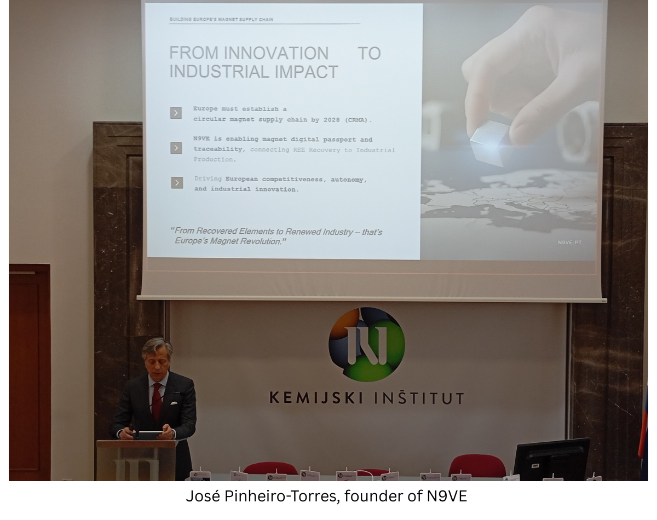
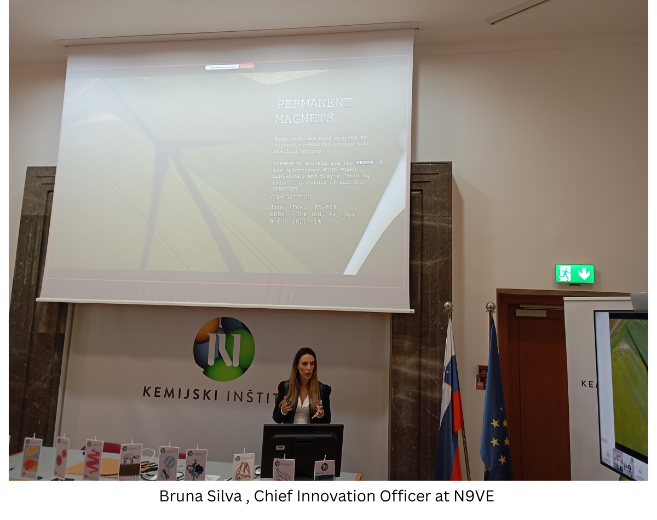
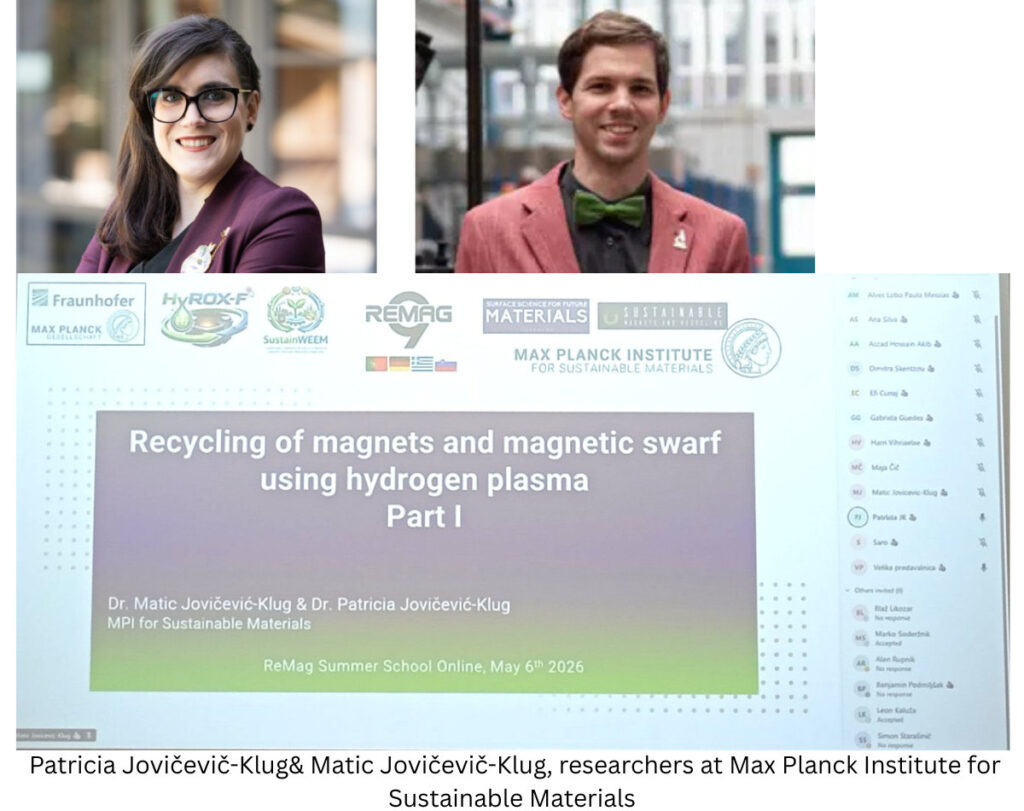
The programme opened with an introduction to ReMag by José Pinheiro-Torres, CEO of N9VE, followed by Bruna Silva, CTO at N9VE, who presented approaches for recycling Nd, Pr, and Dy from end-of-life wind turbine magnets. Their contributions highlighted the strategic importance of recovering rare-earth elements from existing waste streams. Building on this, Dr. Marko Soderžnik, National Institute of Chemistry (NIC) in Slovenia, discussed the specific pathways and challenges involved in recycling SmCo permanent magnets. The session continued with Dr. Patricia Jovičević-Klug and Dr. Matic Jovičevič-Klug, researchers at the Max Planck Institute for Sustainable Materials, who presented hydrogen-plasma-based processing for magnets and magnetic swarf, offering an alternative route for material recovery, part of the MaRS, HyROX-F, and SustainWEEM projects. Finally, Alen Rupnik, researcher at NIC, introduced molten-salt electrolysis as a method for recycling rare-earth magnets within the NdCycle project.
Spent lithium-ion batteries value chain
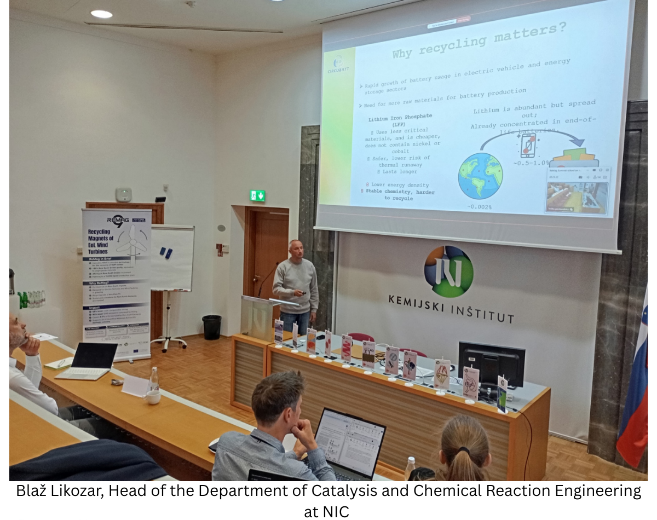
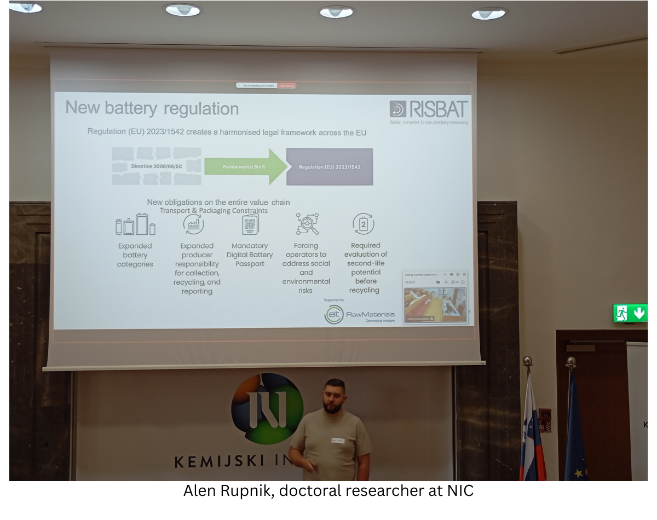
Electrochemical and hydrometallurgical processes to recover battery materials, and challenges of the waste battery value chain were also presented. Alen Rupnik presented the RISBAT project that develops an integrated pretreatment system of Li-ion batteries, to enhance recycling and second-life application rates. Complementing this, Prof. Blaž Likozar presented advances from the CIRCUBATT project on lithium recovery from LFP batteries, demonstrating how battery recycling technologies intersect with magnet recycling in Europe’s broader CRM landscape.
Bioleaching and environmental approaches
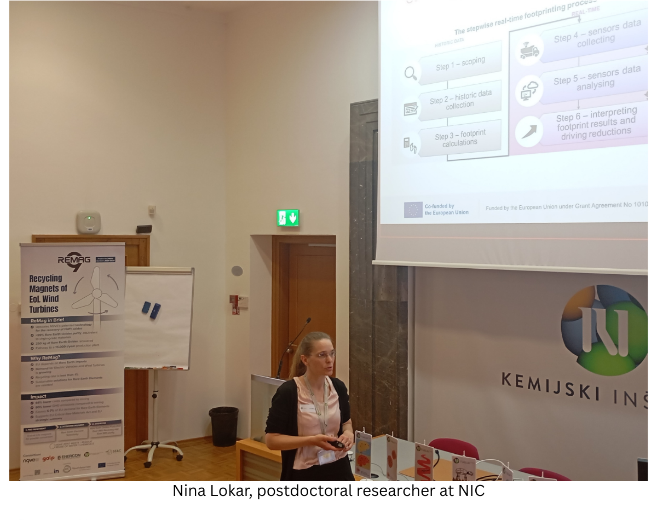
Biological and environmental methods were addressed by Dr. Patricia Jovičević-Klug and Dr. Matic Jovičevič-Klug, who presented their work on extracting critical raw materials from red mud, a secondary product from bauxite extraction, through bioleaching and remediation within the DeToxRed project. In parallel, Dr. Nina Lokar, researcher at NIC institute from the DINAMINE project, discussed digital tools for carbon-footprint monitoring in mining, highlighting the role of environmental data in supporting sustainable resource management.
Critical Raw Material Laboratory at the Jožef Stefan Institute, and industrial perspectives
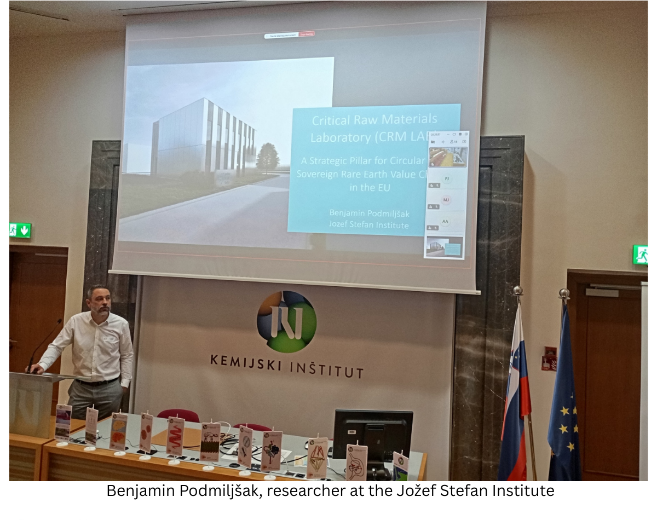
Building on the discussion of technological advancements, Dr. Benjamin Podmiljšak from the Jožef Stefan Institute presented the institute’s plan to establish a national Critical Raw Materials Laboratory, envisioned as a strategic pillar for circularity and for strengthening Europe’s sovereign supply of critical raw materials.
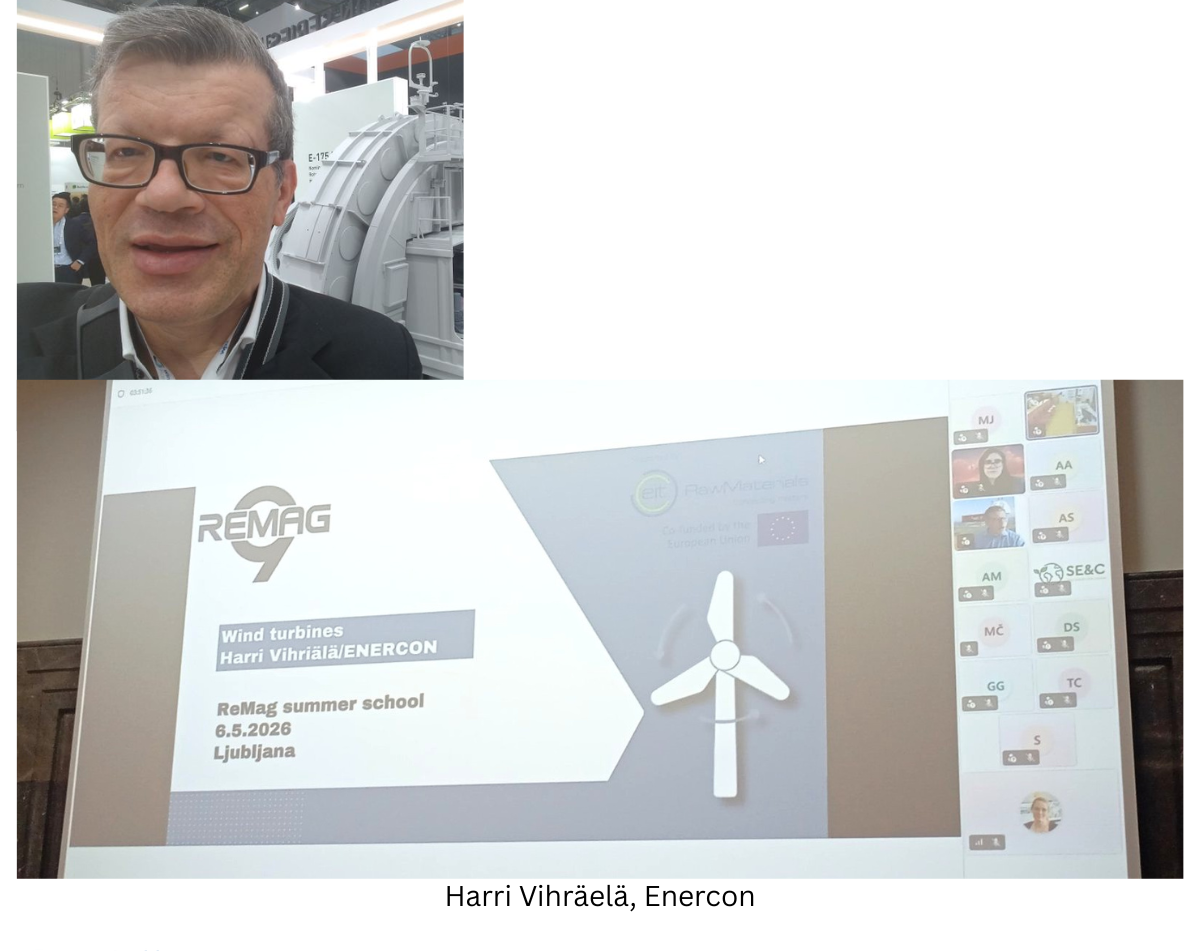
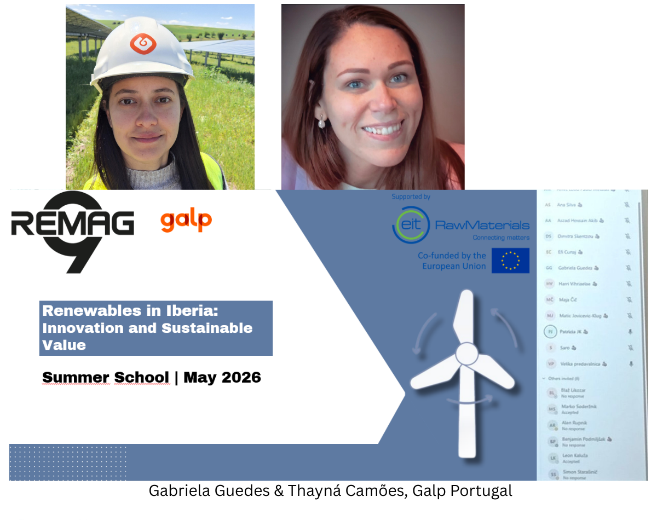
The link between innovation and industry was further explored through contributions from the renewable-energy and magnet-manufacturing sectors. Harri Vihräelä presented Enercon’s activities as a European wind-turbine manufacturer and pioneer in wind energy, and discussed how projects like ReMag support the company’s sustainability goals. From the Iberian energy sector, Gabriela Guedes and Thayná Camões of Galp outlined the company’s work on innovation and sustainable value creation, set against a broader context of supply-chain disruptions and the need to balance low-carbon investment with secure and affordable energy. Gregor Tegeltija from Magneti Ljubljana presented the company’s production of metallic magnets and magnetic systems — including sintered and cast AlNiCo magnets, SmCo and NdFeB magnets, bonded NdFeB magnets, and customised magnetic systems — and emphasised the company’s commitment to sustainable development and continuous innovation in materials and process optimisation. His contribution offered a practical view of industrial needs and the challenges of scaling recycling technologies and securing CRM supply.
Laboratory visits at NIC
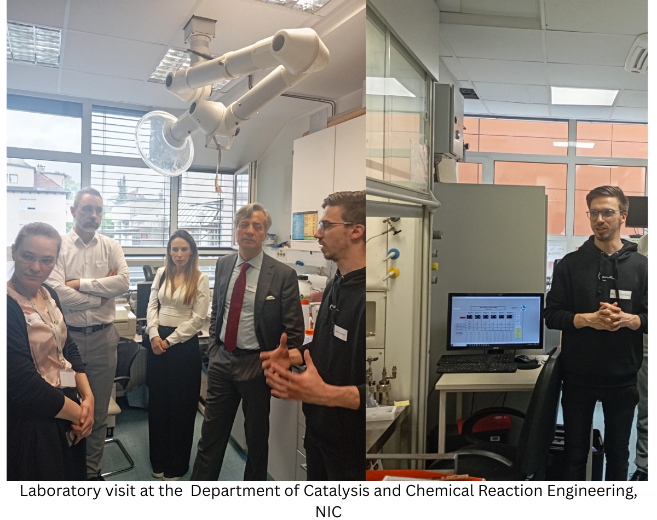
Participants visited the Department of Catalysis and Chemical Reaction Engineering at NIC, gaining an inside look at the facilities and research activities covering various applications, including electrochemical processes for the recovery of critical raw materials. The department works on chemical process engineering, reactor design, and multi-scale modelling, with research spanning CO₂ and natural gas conversion, hydrogen and fuel cell technologies, biomass valorisation, and (bio)pharmaceutical processes.
Open discussion
The Summer School concluded with an open discussion moderated by Blaž Likozar, where participants reflected on the persistent challenges across Europe’s critical raw materials value chain. The discussion highlighted that Europe’s research and innovation landscape remains fragmented, while other global regions — particularly China — currently dominate several stages of the magnet and battery value chains. Participants noted that increasing Europe’s competitiveness in this area is highly challenging and will require stronger integration across the innovation chain, including machinery and equipment that are often costly or sourced outside the EU. The need for greater investment in niche technologies was also emphasised as essential for building resilient and competitive European capabilities.